01, Stairs
Custom Stairs
Spiral, straight, curved, decorative, functional, zigzag and commercial. Drawn to the opening, cut in-house, and installed by the same shop that designed them.
Chapter 01
Every stair starts as a line on paper
Pool Custom Ironworks has been drafting, welding and fabricating stairs at 923 South 1st Street since 1971, and nothing gets cut before it is drawn. That is where all seven types the shop builds start out, each one drawn to the exact rise and run the opening calls for rather than pulled off a shelf.
The shop is built around structural work as much as ornament. A monumental stair for a lobby and a straight run of steps into a mechanical room get the same drafting attention before either one reaches the floor.
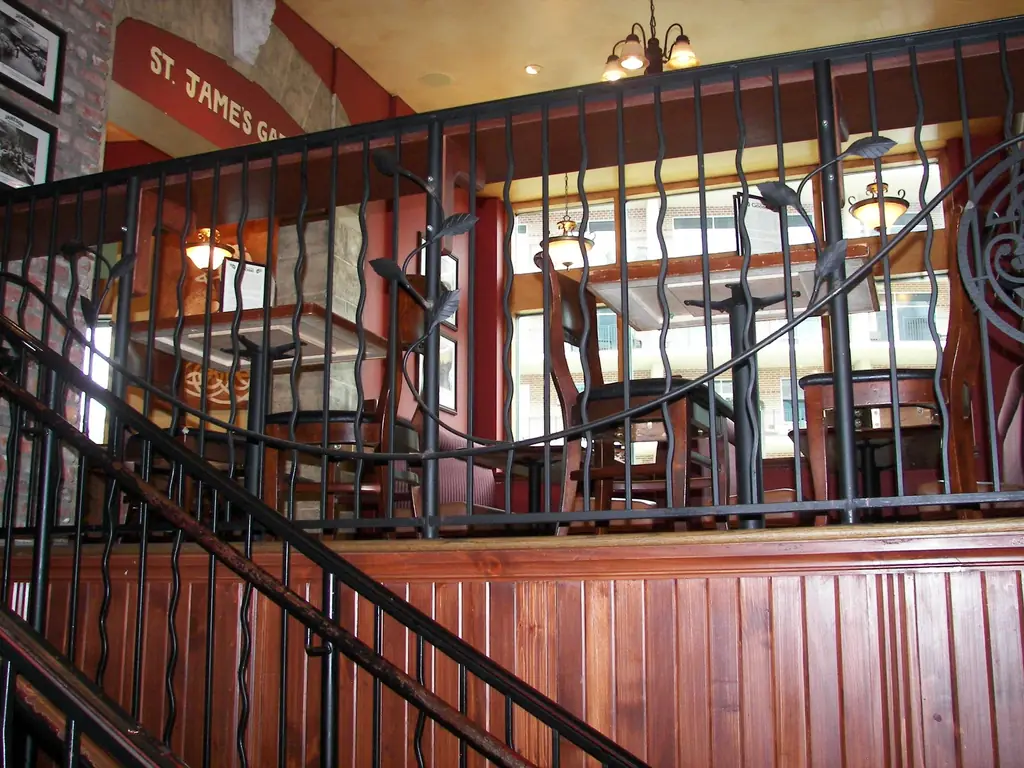
A dark ornamental iron stair rail set inside a warm timber interior
Every set comes with a warranty, not just an invoice
Each and every set of stairs the shop fabricates comes with a FREE 1-year labor and parts warranty, because a stair that fails after the invoice is paid was never actually finished.
Estimates are free on every job, curved, straight or otherwise, and the shop will price from a drawing, a photo of the opening, or a rough sketch on the back of an envelope.
Chapter 03
Curved and spiral is where the reputation was built
"We specialize in curved and spiral staircases," and it shows in what leaves the shop. Rolling a stringer to a true radius and standing it up so every riser lands even is the hardest thing this trade does, and it is the work Pool Custom Ironworks is best known for around Montgomery County.
That reputation was built on commercial jobs, monumental stairs for businesses and schools across the local area, but the same shop draws and rolls a single curved run for a homeowner just as carefully.
Pool Custom Ironworks, Free estimates. One year parts and labor warranty on custom work. Call (936) 756-4292.
One shop, seven kinds of stairs
Whatever the opening needs, it gets drawn for it.
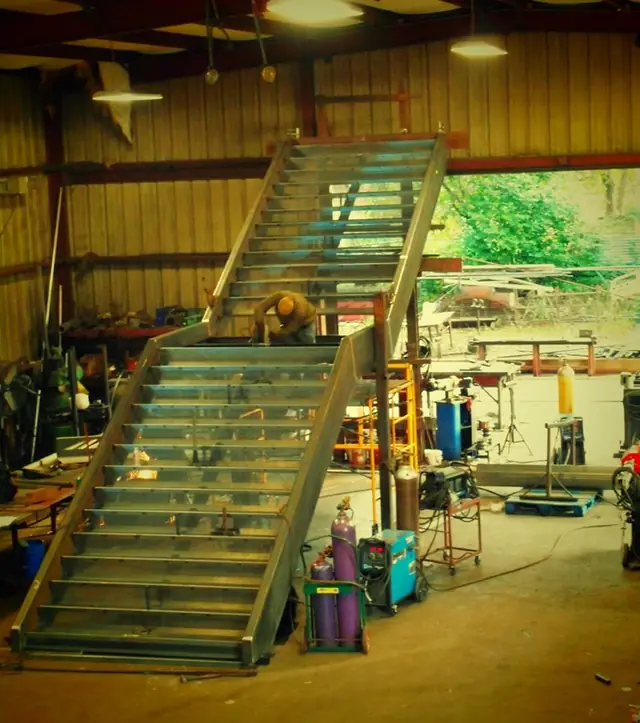
On the shop floor
Assembled here before it ever leaves South 1st Street
Stringers get tacked, checked square, and stood up on the shop floor before a set of stairs ever goes on a truck. Welding, designing, fabricating and drafting all happen in-house, which is the only way to catch a bad radius before it is bolted into a building.