Cable Railings and Other Modern Infill Options
A cable rail reads clean and open, but it is not the right answer for every stair or deck.
September 4, 2026 · 3 min read
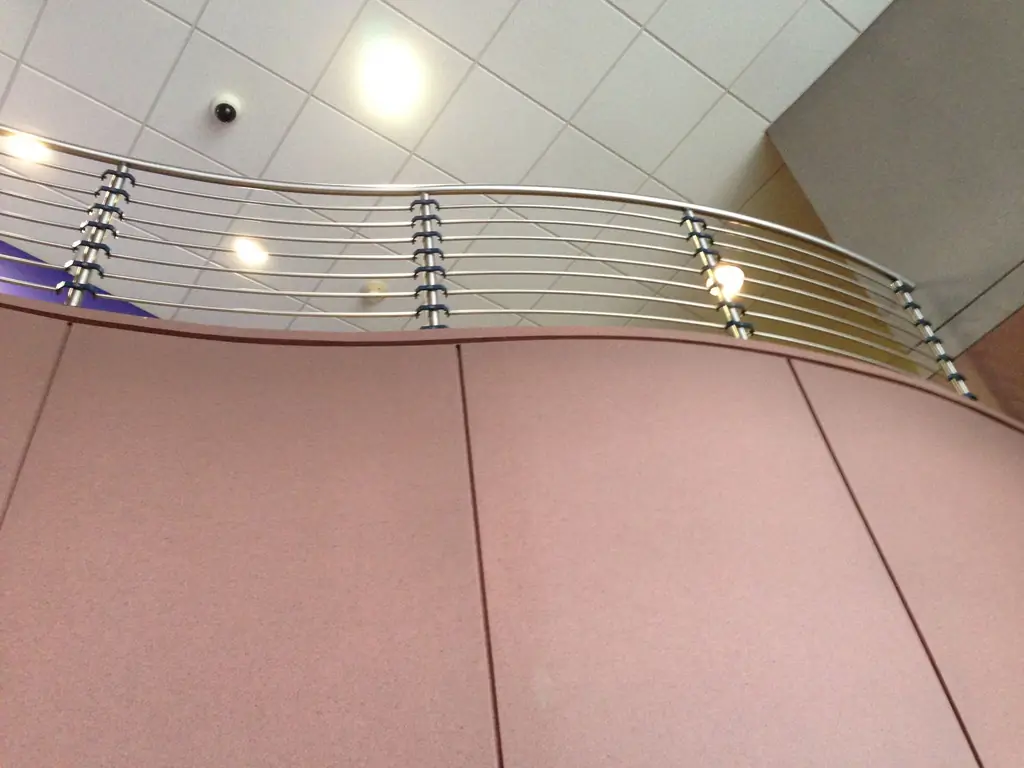
What a Cable Railing Actually Is
A cable railing replaces pickets or glass with horizontal stainless steel cables strung tightly between posts. The result keeps sightlines almost completely open. On a deck overlooking a yard or a lake, or an interior stair in an open floor plan, a cable rail lets the space read as one continuous view instead of being chopped up by vertical bars.
Around Conroe and Lake Conroe, that view is often the whole point of the deck or balcony in the first place. A cable rail on a lakefront deck stays out of the way of the water and the tree line, where a solid picket rail would put a visual barrier right at eye level for anyone sitting down. The same logic carries over to an interior stair or a second floor landing that looks out over a great room, where an owner wants the rail to be functional without becoming the focal point of the space.
Where Cable Makes Sense, and Where It Doesn't
Cable rail earns its keep anywhere the view matters more than a fully enclosed barrier: exterior decks, balconies, and open interior stairs. It is a harder fit where small children or pets need a tighter barrier, since the gap between cables runs wider than the spacing on a traditional picket rail. If that is a real concern for your space, it is worth talking through before committing to cable over another infill.
The posts matter as much as the cable itself. Cable rail relies on end posts that can take real tension without flexing, so the post material and how it is anchored, into a concrete slab, a wood deck frame, or a steel stair stringer, has to be worked out before the run gets fabricated. A cable rail that looks clean in a photo but was hung off an undersized post will sag within a year.
Other Infill Options Beyond Cable
Cable is not the only way to open up a railing without going fully solid.
- Cable rail, for the most open sightline, best where the view is the point
- Mesh infill, a woven metal panel that lets light through with more visual enclosure than cable
- Perforated panel infill, a solid panel worked with a pattern of holes, for a more industrial look that still is not a blank wall
- Traditional picket or baluster rail, the most enclosed option and often the simplest way to meet a tighter spacing requirement
What to Weigh Before You Commit
Stainless cable needs occasional re-tensioning over time as it settles, which a picket or mesh rail does not require. Exposure matters too: humidity and rain in this part of Texas will find any weak point in a finish faster than a dry climate would. And the infill should match the rest of the building. A sleek cable rail on an otherwise traditional storefront can look out of place, the same way a heavy picket rail can feel wrong on a glass-walled lobby.
Maintenance is worth planning for up front rather than discovering later. A cable rail is low maintenance compared with a painted picket rail, since there is no large painted surface to touch up, but the cables themselves do need to be checked and re-tensioned occasionally. A mesh or perforated panel infill needs closer to the same upkeep as any other steel finish, cleaning and an eye on the coating over time. None of these options is maintenance-free, they just ask for different kinds of attention.
We've Built All of These
Our own work includes curved cable railing on lobby mezzanines, straight cable rail on exterior decks, mesh infill under interior stairs, and perforated panel infill on stairs that needed a more industrial look. Whatever direction fits your building, we can talk through the tradeoffs and give you a free estimate. Call (936) 756-4292 or visit us at 923 South 1st St., Conroe.
Pool Custom Ironworks, Inc., (936) 756-4292
Call (936) 756-4292More articles
Curved vs. Spiral Stairs: Which One Actually Fits Your Building
Footprint, headroom, and code geometry decide this before style ever enters the conversation.
How to Choose the Right Metal for a Railing or Stair
The metal that looks right in the shop is not always the one that survives ten years outside.